Daddy Issues, #2
"Will You Be My Daddy?"

One of the most entrenched and still-lively stereotypes (which to me means that there is more than a kernel of truth to it) is that certain women, those who were so-called daddy’s girls, or who expect men to take care of them, or who never had a “regular” dad, i.e. one who went to their ballet recitals or soccer games and patiently explained that more studying would lead to a better grade but in the meantime they loved you—those kinds of dads—are always on the lookout for dads who were never there, or if they were there, were silent, or abusive, or worse.
Maybe they weren’t there physically at all or if they were it was either total silence in the house or a fist through the drywall, a door taken off its hinges, or the worst—the sound of a slap, the silence after, the sound that skin on skin makes when it’s violent, a sort of hiss-slap. That was my dad, who could go from days of silence and absence, of even coming out to a soccer game and seeing your game-winning goal, of going to McDonald’s after without going into a doctor-ly “this crap will clog your arteries” and even order himself some fries because he’d usually eat most of yours—to fists into walls and windows, to my tiny mom, my 5’9, 145 pound dad who could whip tennis and racquet ball serves so hard that he was known for it at the club where we played, to someone who couldn’t possibly be human, and how could I be related to this man, and look so much like him, so much that I stood out from my dirty blonde brother and blonde cousins.
So yes, you could say that I had daddy issues, from a man that I often called Daddy, who decades after fists in walls and post-soccer game McDonalds, of years of not talking to, or occasional yelling matches over the phone, of proud graduation moments where my dad did come and brag on me to anyone who would listen, finally stopped drinking, who had changed behavior. Who had parted ways with my mother, a blessing. Who had found happiness with someone else who prickled me, to put it mildly. Who then tried to apologize and make amends by sending me money, our love language. Who flew me out to his medical meetings, princess weekends at the Four Seasons in Scottsdale, San Francisco, Atlanta, New York, where I shopped and went for spa days while my dad did his presentations and his wife stayed close by him. Which led to us talking more, him calling me back in the early days of Covid to be angry on behalf of Dr. Fauci, of being enemy number 1 of Trump.
And then when I got Covid despite getting the shots, I was terribly sick. And my dad, who I would expect to tell me, “shake it off, pal,” and suggest a run would do me good. No, this time my dad told me to “sit my ass down and convalesce.” That Covid was no joke. Who called three times a day to tell me the latest research and to ask if my breathing was OK. This was five years ago. My dad was 83. I never thought his brain would stop working. But soon before I was diagnosed with breast cancer last summer, it did. Now he forgets what cancer is and who I am. We talk on the phone and he thanks me for calling and asks who I am, again? And then, OK honey, I love you.
So yeah, I’ve had daddy issues as long as I’ve had a dad.
When I was in third or fourth grade, I wanted to marry my Poppy, my grandpa on my mom’s side. Poppy and Nanny took care of my brother and me, my Nanny a longtime social worker and Poppy who owned a lumber yard he’d take me to. He’d take me with him to the cigar store where he’d buy lifesavers and stamps and a New York Times. He’d been a journalist along with my Nanny in upstate New York before they had a family and he took over the family business. He was tall and blue-eyed and almost bald, always in a long-sleeved button down shirt and khaki pants, smelling like wood dust and cedar. We’d get out the stamp books and see which stamps we wanted to get. He’d take my hand and introduce me to the men working the machines at the lumber yard.
Not only did I want Poppy to be my dad, but I wanted to marry him. “I want to marry Poppy,” I said to my Nanny. I figured that she’d understand.
“Honey, Poppy is your grandpa and he loves you very much,” Nanny said gently. “But Nanny and Poppy are married. “You know we love you, honey. Why don’t you and Poppy go the store for me?”
Thank God for Nanny and Poppy. They loved me so hard that I didn’t feel the need to be someone I wasn’t.
But having daddy issues means that you look for fathers in men who often turn out to have the same inability to be available to you emotionally or even physically. It’s like I would hear a beep emanating from a guy—in a bar, at a party, in Starbucks. (not that long ago!) who was saying “I’ll charm you, I’ll be on and off so you don’t know if I’m nice or horrible from day to day, I’ll apologize, I’ll keep you wanting more, I’ll give you what I want, not what two people need in a relationship, and the cycle continues.”
Slowly though, through time, through therapy, through the women’s (and some men’s) friendships that have nourished me, through the sport of trail running that gave me an outlet for my living too much in my head, I began to see that daddy issues can have a good side, a side where you find men in the world that maybe are married (like Poppy!) but who still provide the best and most pure fathering. That’s the reason I called this “Daddy Issues, #2,” because I wrote about its good side for the Washington Post back when, here.
And because I’m old enough and my heart is healed enough to see the goodness in good men. I saw it in my fiance’s dad, Everett Jackson, a rancher and cowboy and all-around good-hearted and steady and strong man who I miss so much now that he’s gone, just this last December.
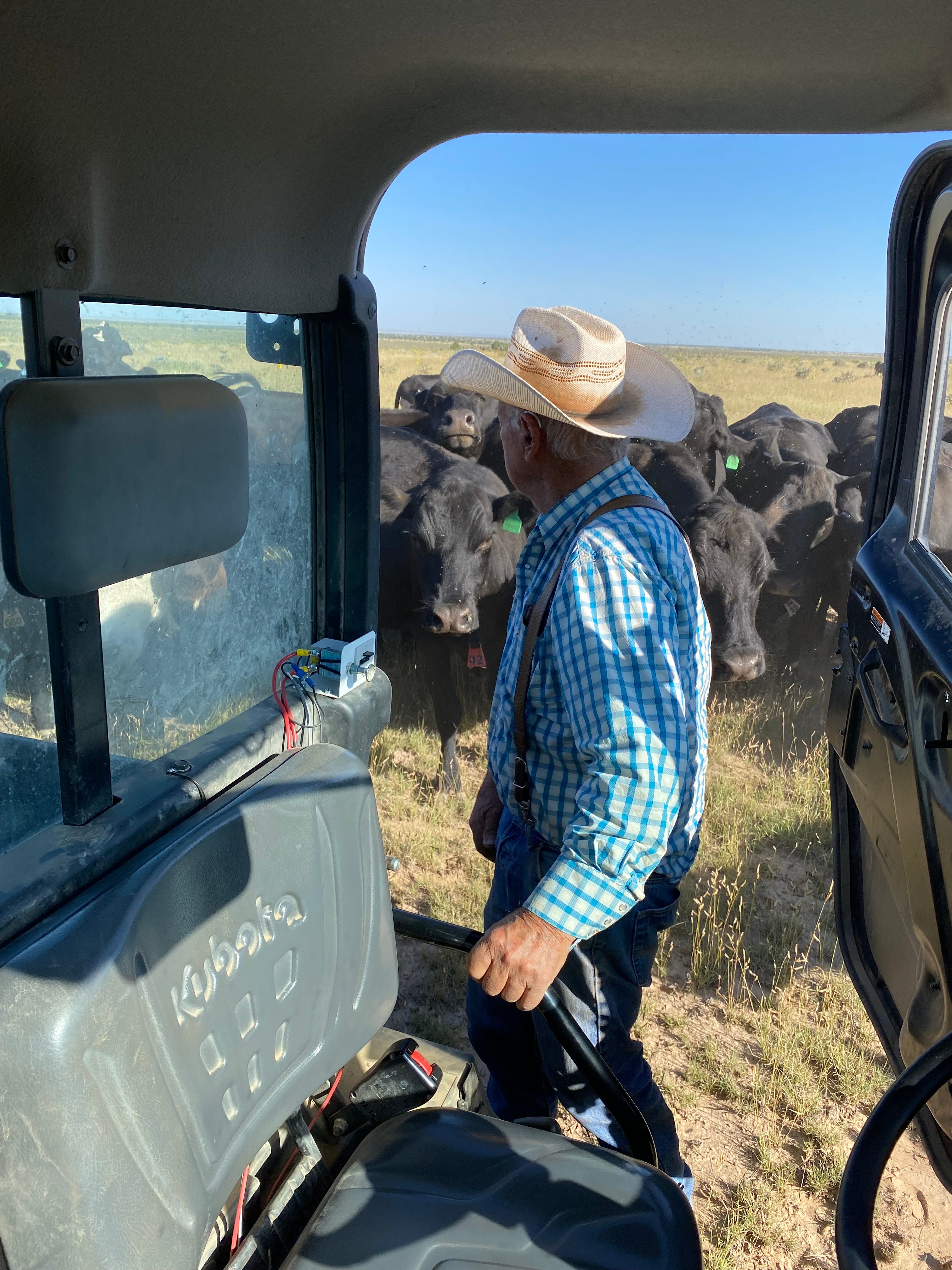
“She’s a city girl,” he said to Lee Ray when I met his mom, Flo, and Everett, the first time I came out to the ranch. “How’s that going to work?” It was pretty obvious, as I arrived in my four-inch Jessica Simpson heels that I’d been hobbling around in when I met Lee Ray in sizzling August heat at the Wal Mart in La Junta.
“Dad, it’s going to be OK,” Lee Ray says he told his Dad.
And his mom and dad, whom I sat in the middle of as we drove up a steep craggy trail in the side by side (I’d never been in let alone ridden in such a vehicle, of course) to get to the top of the “pass,” stopping so that Everett could move a large boulder in our way while Flo kept her foot on the brake—what? Who were these people, so capable and calm and friendly, yet also daring and exciting? How were they in their 70s and 80s riding up trails (“you want to go up that? Everett would ask, pointing to the tippy top of a ridge?) and going there anyway, no matter what. Always feeling safe and grounded and happy with them. I felt like I wanted them to be not my mom and dad exactly—I had a mom and dad who I now got along with—at 54, it had been hard won. But they are and were my Nanny and Poppy, who I could be myself with, who I could help and learn from.
It doesn’t mean that I don’t think of the pain I grew up with, how I tried to find a man as unavailable and unpredictable on every corner. It just means that I’ve turned off my “on duty for chaos” sign and opened my heart to the people who see the real me.
I love reading your work, Jill!
What a beautiful and poignant tribute to the (sometimes painful, sometimes joyful) unfolding of this one life! Thank you Jill for writing and sharing with us all.